
Synthetic Test Data in Software Testing
12.03.2026
Software testing is an essential part of the software development process, and high-quality test data forms its foundation. When the use of production data is not possible due to security or availability reasons, one viable option is synthetic test data. But is it a solution to all testing challenges? Let’s look at the topic impartially: what benefits does synthetic data bring, and what limitations are associated with it?
Benefits: Why is synthetic data appealing?
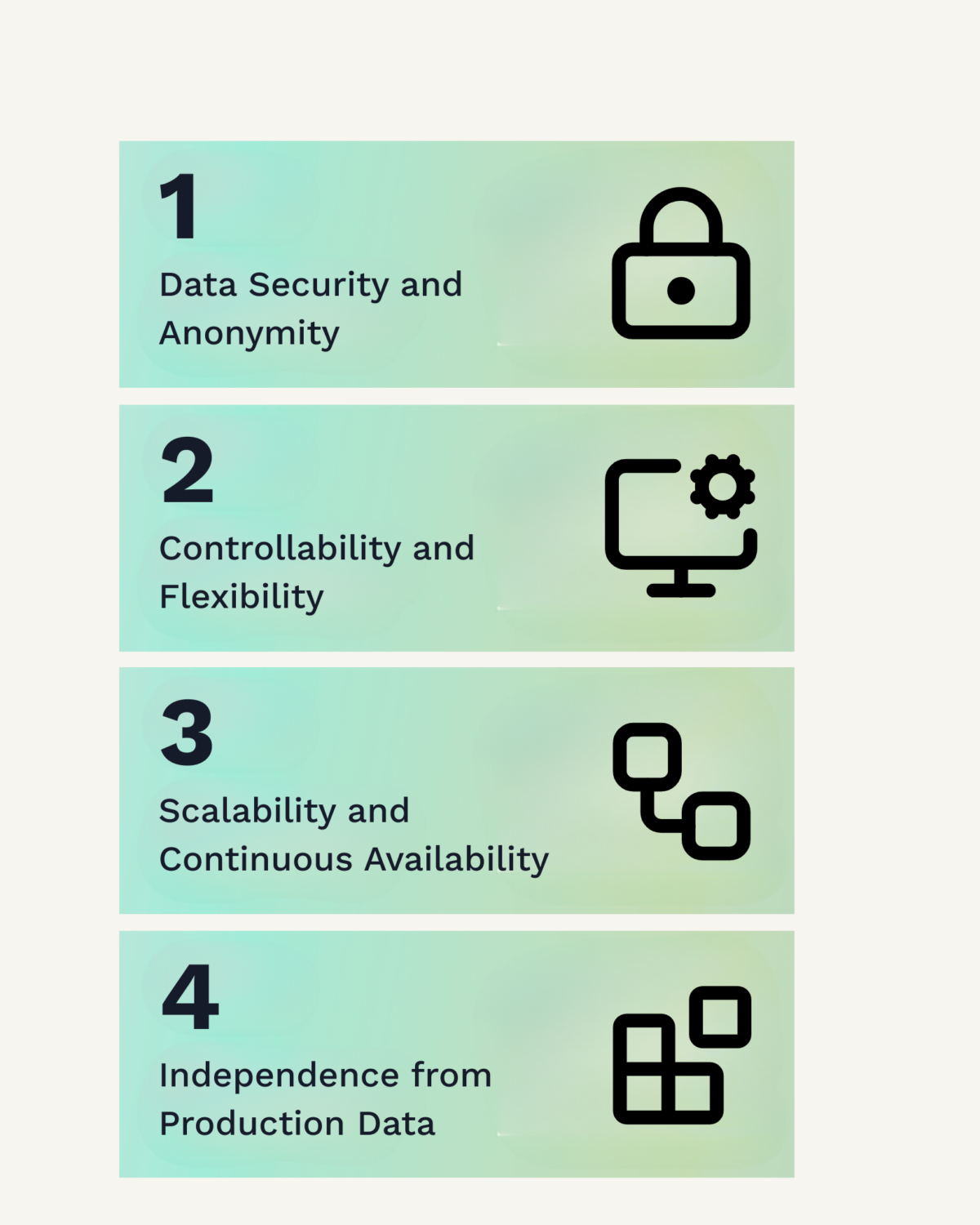
- Data Security and Anonymity
Synthetic test data does not contain real personal data or confidential information, making it a safe option and compliant with data protection regulations (such as GDPR). This is especially important in sensitive sectors, such as healthcare and finance. - Controllability and Flexibility
Testers have the opportunity to create precisely defined test cases, including exception situations and edge cases. This improves test coverage and allows for the evaluation of the system’s operation in various scenarios. - Scalability and Continuous Availability
Automatic test data generation enables the continuous production of high-quality test data for the development process and CI/CD pipelines without manual work or delays. This speeds up development cycles and supports agile methodologies. - Independence from Production Data
Synthetic data helps avoid the challenges associated with copying, masking, and managing production data. This reduces risks and facilitates the standardization of processes.
Drawbacks: Where do the risks lie?
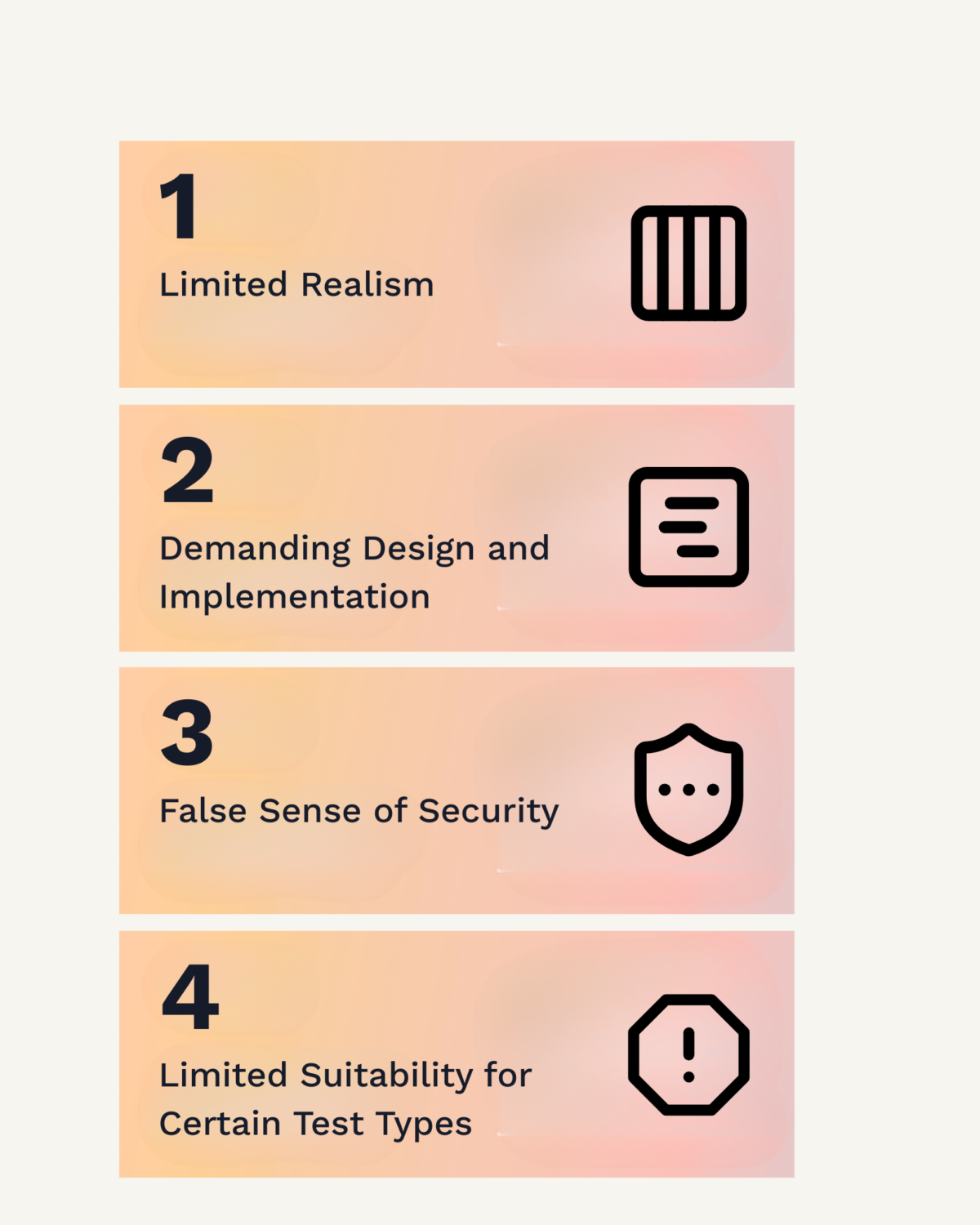
- Limited Realism
Synthetic data is based on predefined rules and models, and it often does not fully replicate the diversity of production data or unexpected user behaviors. This can lead to surprising errors in the production environment. - Demanding Design and Implementation
Producing high-quality synthetic data requires a deep understanding of the application’s operation, data structures, and business logic. For this reason, the initial investment can be significant. - False Sense of Security
If the system is tested only with synthetic data, a false perception of its stability may arise. In real use, production data can reveal problems that synthetic testing was unable to detect. - Limited Suitability for Certain Test Types
While synthetic data works well in unit and integration testing, it is not always suitable for performance testing, analytics validation, or behavior-driven testing, which require authentic use cases and data complexity.
Summary
Synthetic test data offers many advantages – especially in situations where data security, test manageability, and process automation are central. However, it does not replace genuine production data in all situations. The best result is often achieved by combining synthetic data with anonymized or masked production data and realistic test scenarios. This ensures the reliable operation of the system in both development and production.

- Blog
- Salesforce
- Software testing
- Test automation